
Identify which surrounding layer remains
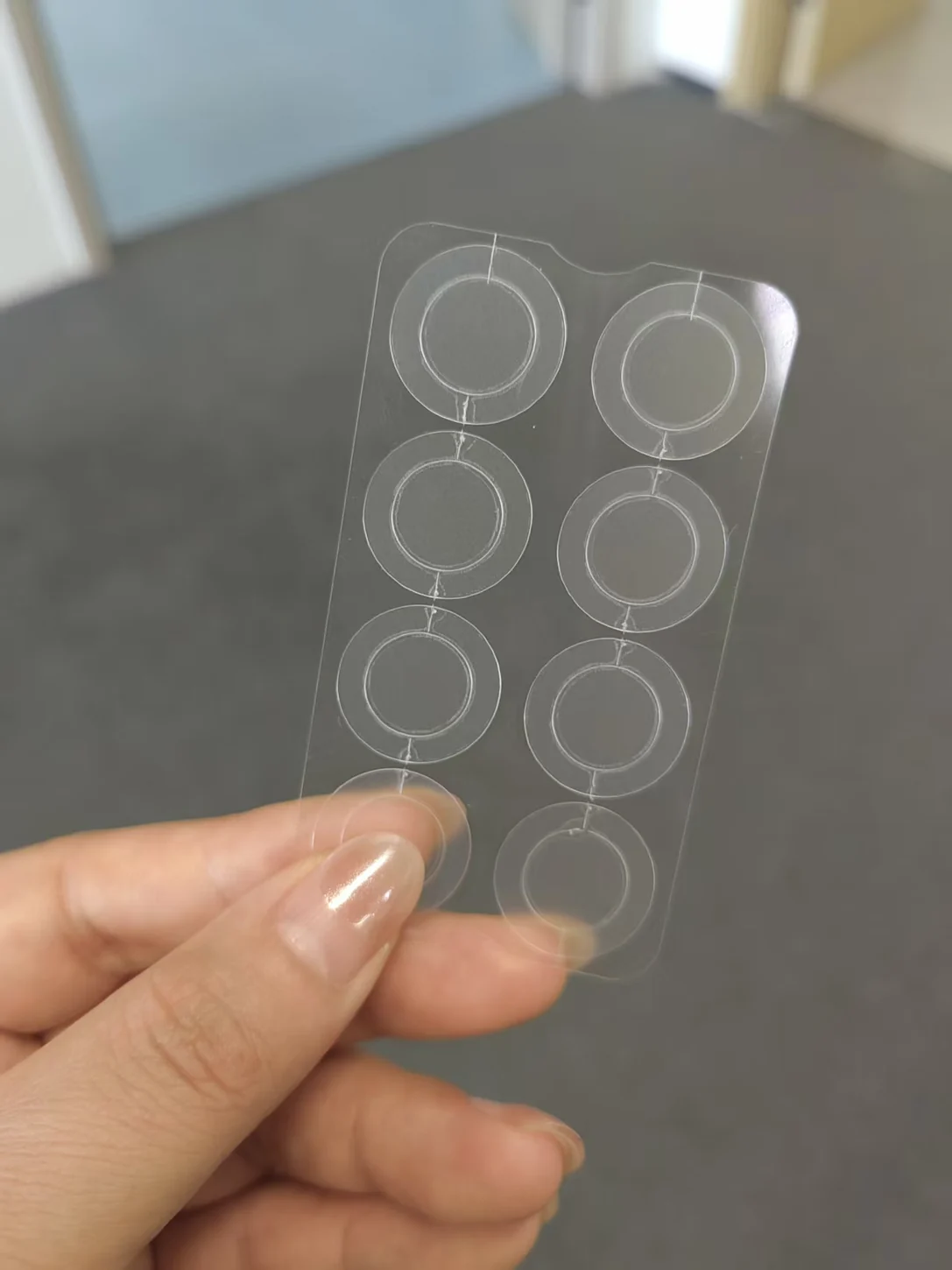
Use an annotated sheet to identify the product, its liner and the surrounding material. Specify which of these is removed during manufacture. On a sample with a kiss-cut outline, the visible cut line does not by itself tell the packer which areas should be present at delivery.
Review picking and counting
Compare one stripped sheet with one retaining the surrounding material. Try locating the first patch, lifting it cleanly and counting the pieces left on the sheet. Transparent patches can be easier or harder to identify depending on the background. Record which arrangement works with the real opening instructions.
Confirm the format with the converter
Ask how matrix handling changes the delivered sheet, waste management and quotation. Narrow gaps may be difficult to strip consistently. Examine a complete sheet including outer rows. Attach a labelled example of the accepted presentation to the order so the next run matches the decision.
Frequently asked questions
Can a photo of one loose patch establish the matrix requirement?
A loose part shows the product outline. Send a full-sheet image or drawing as well so the converter can identify the expected material between and around the parts.