
Choose the crescent outline for your brief
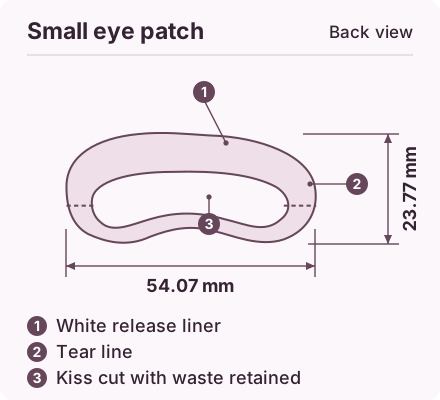
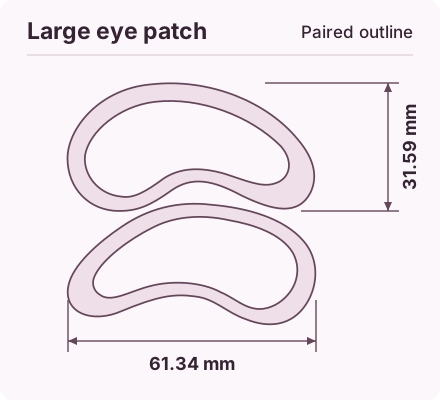
Two drawing references are available for discussion. The compact outline measures 54.07 × 23.77 mm and the extended outline measures 61.34 × 31.59 mm. These are the overall dimensions called out on the supplied drawings. Confirm the drawing revision, which layer each dimension describes and the tolerance for your selected version.
Review the inner curve, the width through the body and the room at both ends. A wider footprint changes the contact area and the space needed in the tray. Decide whether you want to evaluate one size first or compare both under the same review conditions.
- Identify the compact or extended drawing in your sample request.
- Confirm whether the layout needs a mirrored left and right pair.
- Mark the edge and any peel feature separately from the area occupied by the cosmetic microarray.
Compare adhesive tape and hydrocolloid backing
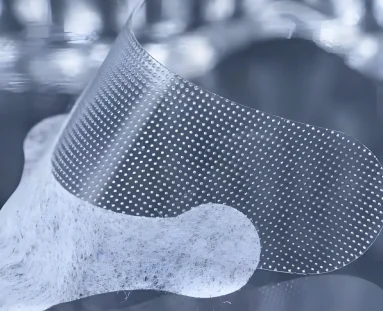
Ask for the exact construction of each candidate. A skin-contact adhesive tape can pair a film carrier with a specified adhesive and removable liner. A hydrocolloid laminate may have its own carrier and liner. The name of the material alone gives little information about the thickness, flexibility or appearance of the assembled crescent.
Hold the outline and pack constant when comparing candidate materials. Review the ends of the crescent for curl, the visibility of the adhesive border and how the sample lifts from its liner. Put the characteristics that matter to your brand in the brief, then assess suitability on the actual sample.
- Film tape candidate. Review transparency, flexibility around the curve and the defined skin-contact side.
- Hydrocolloid candidate. Check the supplied grade, the thickness through the stack and the appearance of the border.
- For either option. Confirm the liner format, peel start and handling once the sample is removed from the tray.
Review the tray and sachet as one pack
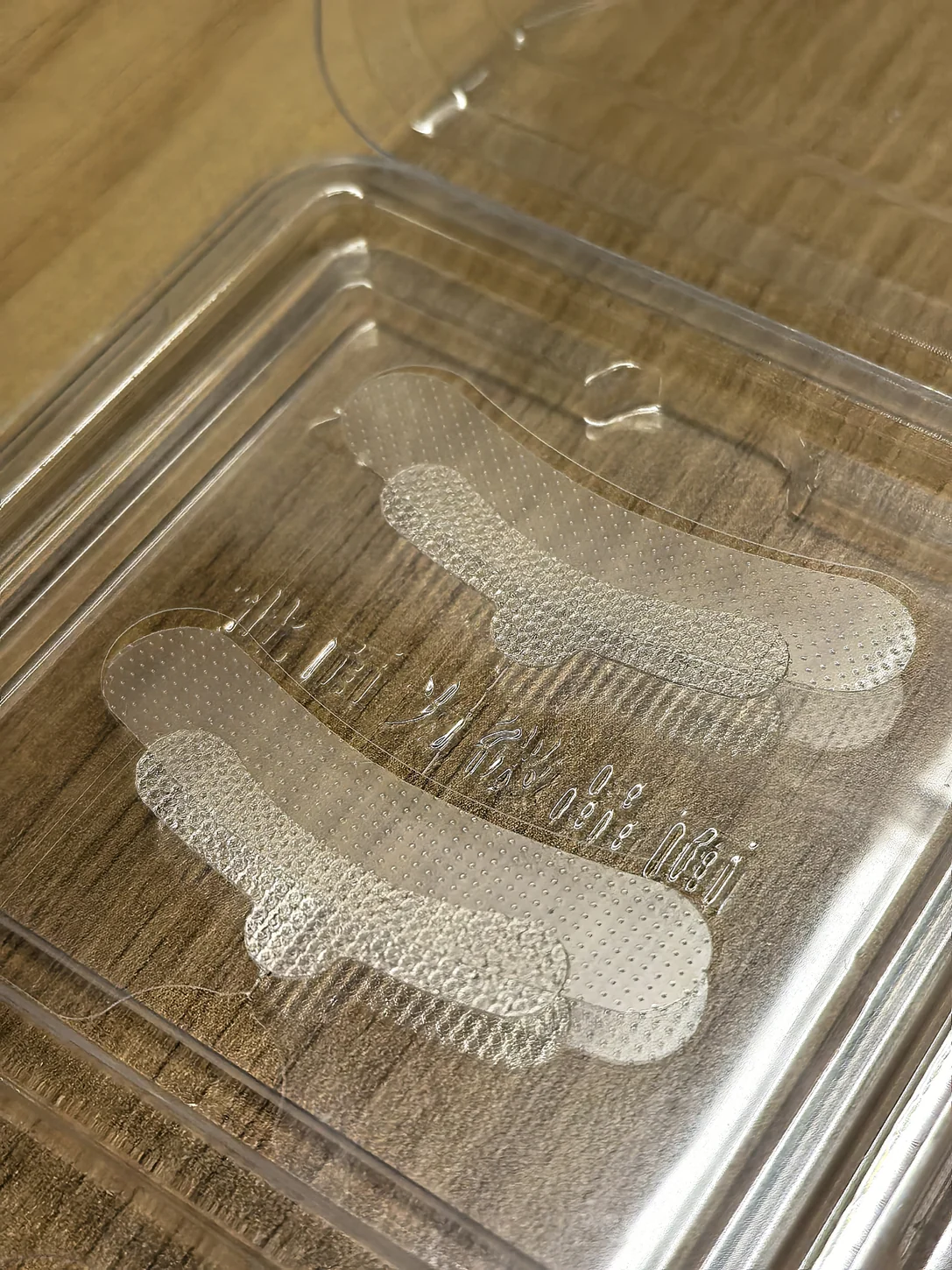
A formed tray separates the two crescents and holds them in a repeatable orientation. Review how the wider part of each crescent sits in the cavity, how the pair is lifted out and which surfaces can contact the carrier. Check the tray on the selected outline rather than relying on the appearance of a package photograph.
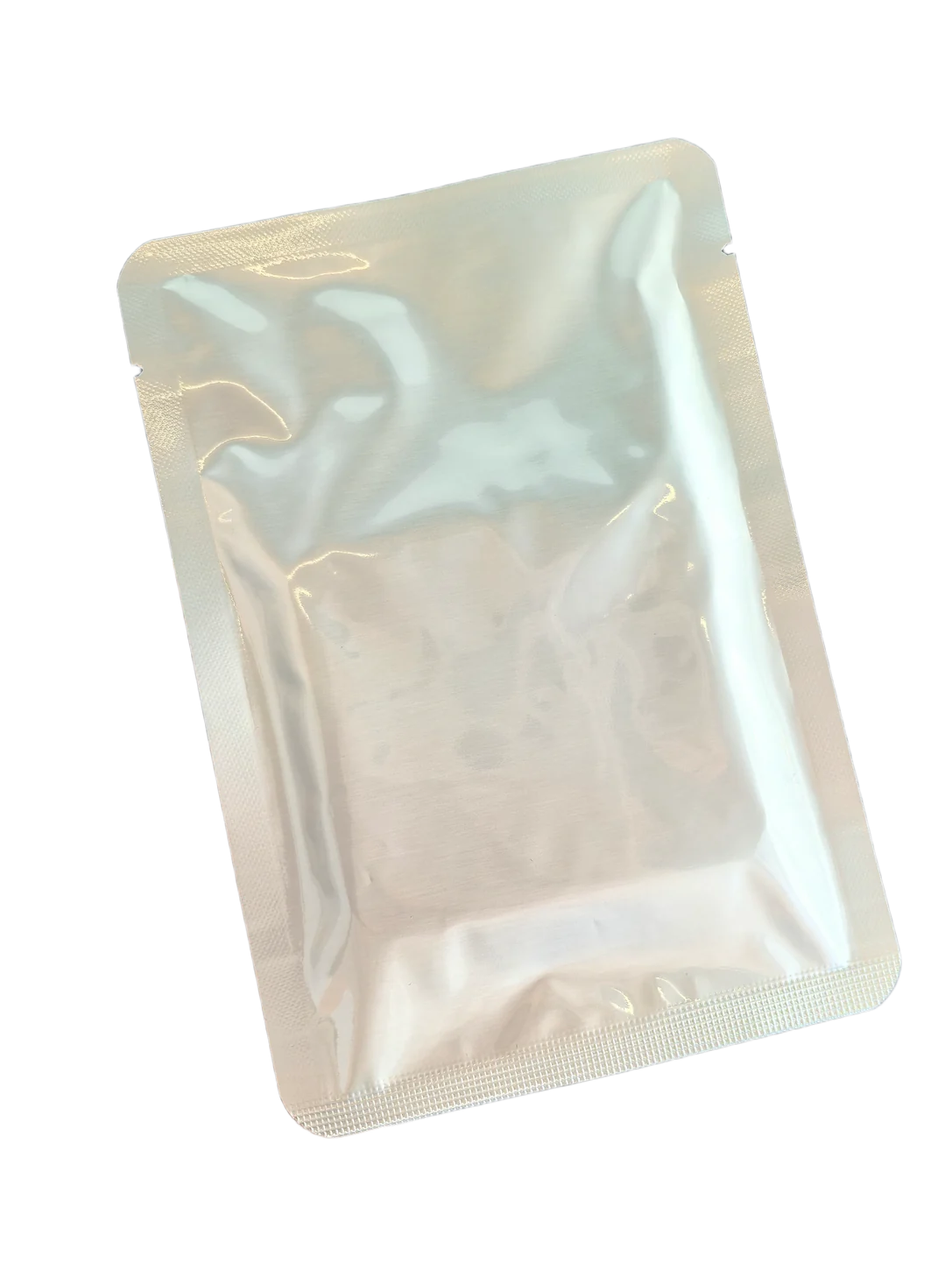
The sachet, tray and retail carton can be reviewed as a set. Ask where the opening feature and outer code will sit, how the pair count will be expressed and whether the pack can be evaluated with the same materials intended for production. Printed mockups and sample pack photographs are useful for layout review.
Prepare the artwork for your own brand
Supply your logo, preferred presentation and target market before laying out the front and back panels. Confirm the intended product name, pair count and spaces needed for the ingredient declaration, directions, lot information and other approved text.
Keep a separate artwork revision for each pair count or size. Assign someone on your team to approve the market-specific wording. Review a proof at actual size so the carton and sachet match the selected tray and the text stays clear of fold, seal and opening areas.
Agree what the first sample should answer
For a private-label eye patch quote, share the drawing or outline reference, material options you want to compare, pack components, target market and expected quantity. Identify the questions you want to resolve first so Celsentra can confirm which samples, documents and artwork checks fit the project.
Before ordering, connect the approved patch sample to its outline revision, backing and liner, tray, sachet and artwork files. Keep one comparison record if two samples are reviewed. This makes it easier to tell which version was approved and which changes need another review.
- Send a drawing reference or describe the contour and the intended placement area.
- Name the backing candidates and how you want the liner and tray to open.
- List the proposed pair count, branded pack elements and the approval contact.
Reference samples and drawings
Inside the partner workshop
See equipment and sample handling at the manufacturing partner’s facility.
Frequently asked questions
Can Celsentra supply dissolvable cosmetic eye patches under my brand?
Yes. Celsentra accepts private-label inquiries for cosmetic microneedle eye patches. Send your outline, backing preference, planned package and artwork needs so the team can confirm the project scope.
Do the two drawing sizes describe every private-label eye patch?
The 54.07 × 23.77 mm and 61.34 × 31.59 mm sizes are drawing references. Use the selected drawing revision to confirm the finished outline, layer boundaries and packaging dimensions for your project.
Can I compare two backing materials before approving the pack?
Ask the team to scope a comparison on the same outline and pack where feasible. Compare the assembled samples for handling, appearance, release and edge condition, then confirm the selected construction for the artwork and production brief.
What should I provide for a custom sachet or carton?
Provide your logo files, an artwork brief, target market, pair count and approved label text as available. Ask for the confirmed artwork layout before preparing final print files.